
Dog boarding in Traverse City has evolved significantly over the past decade. Whether your dog stays at an in-home boarding service or a professionally run facility, the daily structure, staff attention, and enrichment activities matter far more than the building itself.
Key Takeaways
- Quality dog boarding in Traverse City follows a structured daily routine from morning feeding through evening settle-down
- Staff-to-dog ratios directly determine how much individual attention your pet receives each day
- Separation anxiety is actively managed through familiar scents, consistent schedules, and gradual introduction
- Vaccination requirements protect every dog and are non-negotiable at responsible boarding facilities
- Enrichment activities like yard play, puzzle feeders, and social time reduce stress and boredom significantly
- In-home boarding gives dogs a quieter, home-like environment that traditional kennels simply cannot replicate
What Really Happens at a Dog Boarding Facility Each Morning?
The morning routine at a dog boarding facility in Traverse City starts well before most owners are out of bed. Dogs are fed on their regular schedule, which is critical for gut health and emotional stability. Staff check each dog’s appetite, energy level, and overnight behaviour before anything else.
Dog boarding in Traverse City involves a structured daily routine covering morning feeding, yard time, enrichment, rest, and evening settle-down. At in-home boarding services like TC Tails, dogs share the caretaker’s actual living space, maintaining a home routine that reduces stress and anxiety compared to traditional kennel environments.
After breakfast comes morning yard time. At an in-home setup like TC Tails, that means a massive fenced backyard comparable to a real dog park in Traverse City. Dogs run, sniff, and play without leashes or kennel dividers restricting them.
Staff observe body language during every outdoor session. Tail position, ear set, play style, and interaction patterns all communicate whether a dog is relaxed or overstimulated. This observation is ongoing throughout the day, not just at set check-in times.
“Dogs who maintain predictable feeding and exercise schedules during boarding show significantly lower cortisol levels than dogs whose routines are disrupted.” , Dr. Lisa Radosta, board-certified veterinary behaviorist, Florida Veterinary Behavior Service
This finding underscores why the best dog boarding Traverse City facilities mirror a dog’s home schedule as closely as possible, right down to meal timing and nap periods.
Midmorning typically includes rest. Dogs, like people, need downtime after stimulation. Good facilities and in-home caregivers build quiet periods into the day so dogs can decompress. Nap time in a soft bed or on a couch is not laziness; it is active recovery that keeps moods stable.
Read More About: How Scent Helps Your Dog Feel at Home During Pet Sitting
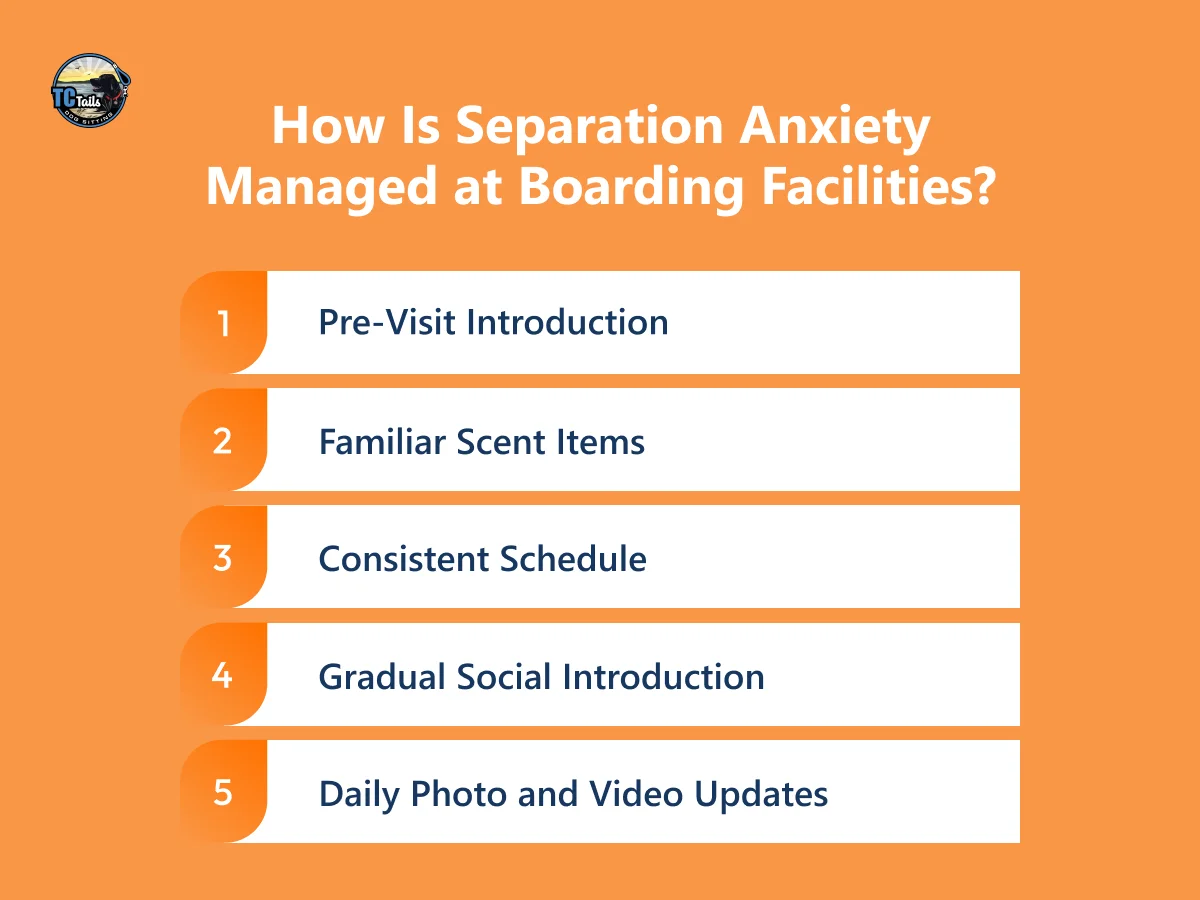
How Is Separation Anxiety Managed at Boarding Facilities?
Separation anxiety is the number-one concern Traverse City dog owners raise before booking their first overnight dog boarding stay. It is also one of the most misunderstood aspects of the boarding experience.
According to the Pet Care Services Association, the industry’s leading trade body, accredited boarding facilities commit to a Code of Ethics and Pet Owners’ Bill of Rights, ensuring standards in safety, sanitation, training, and animal care that protect every dog in their care.
Anxiety management begins before drop-off, not after. Experienced in-home boarders ask for your dog’s blanket, favourite toy, or a worn T-shirt. Familiar scents activate the olfactory memory system and signal safety far more effectively than any verbal reassurance.
Step 1: Pre-Visit Introduction
A free meet-and-greet lets your dog explore the boarding space before their first stay. They sniff every corner, meet the caretaker, and leave having built a positive memory of the location.
Step 2: Familiar Scent Items
Bring a blanket or worn clothing from home. The familiar smell reduces cortisol levels during the first night and helps dogs settle faster without the owner present.
Step 3: Consistent Schedule
Dogs thrive on predictability. Maintaining your dog’s feeding times, walk schedule, and bedtime routine during their stay removes uncertainty and significantly reduces anxiety signals.
Step 4: Gradual Social Introduction
Dogs new to dog boarding traverse city are introduced to other pets slowly and only when both animals show relaxed body language. Forced introductions cause stress that lingers for days.
Step 5: Daily Photo and Video Updates
Owners receive photos and videos throughout every stay at TC Tails. When you can see your dog napping comfortably on a couch, your own anxiety drops too.
The techniques that work best for anxious dogs during multi-night stays include consistent scheduling, familiar scent items, and gradual introductions, all of which experienced in-home caretakers implement from day one.
A 2023 study published in the journal Applied Animal Behaviour Science found that dogs given owner-scented items during boarding showed a 38% reduction in stress-related vocalizations during the first night compared to control groups. The practical takeaway is straightforward: pack something that smells like home.
Is Your Dog Ready for Their First Stay? |
What Enrichment Activities Keep Boarding Dogs Happy Daily?
Enrichment activities are what separate an outstanding Traverse City dog kennel experience from a merely adequate one. Boredom is a real stressor for dogs, and unstimulated dogs develop anxiety behaviours far faster than engaged dogs.
Physical enrichment includes multiple daily yard sessions, fetch, tug play, and off-leash running in a secure space. At TC Tails, the backyard rivals the size of West Bay dog park, meaning even high-energy breeds get the outlet they need without leaving the property.
Mental enrichment matters just as much as physical exercise. Puzzle feeders, scatter feeding in grass, sniff walks, and short training sessions all tire dogs out in ways that pure running cannot. A mentally stimulated dog sleeps deeply and wakes calm.
According to research from the ASPCA on canine enrichment, dogs who receive daily mental stimulation show fewer stress behaviours and adapt more easily to temporary changes in environment, including boarding stays. Enrichment is not optional; it is welfare.
Social enrichment is the third pillar. Dogs are pack animals, and sustained human contact during a boarding stay is itself enriching. In-home boarding is uniquely positioned here because the caretaker is present throughout the day, not cycling between multiple dogs across a large facility.
Read More About: The Dog Sitter’s Playbook: Activities to Keep Your Dog Happy
Vaccination Requirements and Health Checks at Dog Boarding
A responsible boarding facility for dogs outline that all boarding facilities must have a preventive medicine program supervised by a licensed veterinarian, with emergency care protocols in place for any animal showing signs of illness. This is not a formality; it is the foundation of a safe group environment.
Core vaccination requirements at most quality facilities include rabies, DHPP (distemper, hepatitis, parvovirus, parainfluenza), and Bordetella (kennel cough). Some facilities also require leptospirosis, especially if dogs have outdoor exposure. Your vet can provide a vaccination certificate, and most facilities accept digital records.
According to the American Veterinary Medical Association, Bordetella vaccination is particularly critical for dogs in boarding environments where animals share airspace. Even in low-stress in-home settings, the vaccination requirement protects all dogs present.
Health checks at drop-off include a visual assessment for signs of illness, injury, or parasites. Any dog showing active symptoms is not accepted. This policy protects your dog as much as others. If your dog develops signs of illness during a stay, a quality caretaker contacts you immediately and has clear protocols for reaching emergency veterinary care.
First-time boarders should prepare documentation and vaccination records in advance, and have a written routine ready for the caretaker covering feeding times, medication needs, and any known triggers.
Ready to Book Dog Boarding in Traverse City? |
How TC Tails Differs From a Traverse City Dog Kennel
The traditional Traverse City dog kennel model houses dogs in individual runs or kennels, often in a dedicated building with multiple staff members rotating through. For some dogs, this works fine. For anxious, shy, or people-oriented dogs, it is a significant source of stress.
TC Tails operates entirely differently. Your dog sleeps inside Jared’s home, on real furniture, with access to the living areas they would use in your own house. There are no mandatory crates, no concrete floors, and no echoing bark chambers.
The ratio difference is striking. A commercial kennel may have one staff member monitoring 15 or 20 dogs. At TC Tails, Jared provides direct, personal attention to every dog present throughout the full day and overnight. When something changes in your dog’s behaviour, it gets noticed immediately.
Jared has 20-plus years of experience working with animals of all breeds, sizes, and temperaments. He holds current pet first-aid and CPR certifications. When you leave your dog at TC Tails for overnight dog boarding, you are leaving them with a person who has made animal care their life’s work, not a facility employee starting their first week on the job.
Read More About: Why Dog Parents Are Choosing At-Home Dog Sitters Over Kennels
Your Complete Dog Boarding Checklist Before Drop-Off Day
A well-prepared dog has a dramatically better first experience. Use this checklist before your dog boarding traverse city drop-off to set your pup up for a calm, comfortable stay.
- Current vaccination records (rabies, DHPP, Bordetella) in digital or paper format
- Your dog’s regular food, portioned into daily servings with clear labels
- A blanket, worn T-shirt, or toy with your scent on it
- Written feeding instructions including amounts, timing, and any dietary restrictions
- Your vet’s contact information and emergency vet location in Traverse City
- Any medications with dosing instructions in writing
- A note about your dog’s normal daily routine, favourite activities, and known triggers
- Your contact number and a backup contact in case you are unreachable
Each item on this checklist directly reduces anxiety for both dog and owner, and experienced caretakers appreciate owners who arrive prepared with written instructions and familiar comfort items.
Conclusion
Understanding what actually happens inside a boarding facility for dogs like TC Tails removes the mystery and the anxiety, both yours and your dog’s. Quality dog boarding in Traverse City is structured, enriching, and attentive, especially when it happens inside a real home with a qualified, experienced caretaker. book your free meet-and-greet.
FAQs
A typical day at a dog boarding facility, Traverse City?
A typical day at a quality dog boarding facility in Traverse City begins with morning feeding on the dog’s regular schedule, followed by outdoor yard time for exercise and socialisation. Midmorning includes rest and mental enrichment activities such as puzzle feeders or scatter feeding. Afternoons involve another play session and human interaction, with a calm evening routine mirroring the dog’s home environment. At TC Tails, dogs share the caretaker’s living space throughout the entire day and overnight, receiving continuous attention rather than scheduled check-ins.
How do boarding facilities manage separation anxiety?
Boarding facilities manage separation anxiety by maintaining the dog’s regular feeding and exercise schedule, using familiar scent items from home, and introducing the dog to the environment gradually before their first stay. At TC Tails, every new client receives a free meet-and-greet so the dog can explore the home and meet Jared before their first overnight. Daily photo and video updates are also sent to owners, which helps reduce both the dog’s anxiety and the owner’s worry throughout the stay.
What vaccines does my dog need before boarding TC?
Dogs boarding in Traverse City need current rabies, DHPP, and Bordetella vaccinations at minimum. Some facilities also require leptospirosis coverage depending on outdoor exposure. You should bring a written vaccination certificate from your vet at drop-off. These requirements exist to protect every dog in the boarding environment, not just the dog being boarded. If your dog is overdue for any vaccinations, schedule a vet visit at least two weeks before their boarding date to allow time for immunity to develop.
How much attention does a dog get at in-home boarding?
At an in-home boarding facility like TC Tails, a dog receives continuous personal attention throughout the entire day because the caretaker is present in the same living space. This contrasts with commercial kennels where one staff member may oversee 15 or more dogs simultaneously. In-home boarding provides a far higher ratio of human attention to dogs, which is especially important for anxious, senior, or socially dependent dogs who need consistent contact to feel settled and secure.
What to pack for your dog’s first overnight boarding?
For a first overnight boarding stay, pack your dog’s regular food portioned into daily servings, a blanket or worn T-shirt with your scent, any medications with written dosing instructions, and your vet’s contact information. Include a written daily routine covering feeding times, walk schedule, and any known triggers or preferences. Familiar items reduce anxiety significantly during the first night. Avoid packing anything irreplaceable, as excited dogs can damage beloved toys during play. See the full boarding checklist on TC Tails for a complete pre-stay preparation guide.
