
The question is not which option is better in general. It is which option is better for your specific dog. Dog sitting services in Traverse City now offer a range of formats, and matching the right one to your dog’s temperament makes the difference between a dog who thrives and one who just survives.
Daycare for dogs is a daytime-only arrangement, typically covering your regular work hours. Overnight boarding covers evenings, nights, and longer multi-day periods. Both are forms of professional dog sitting services, but they serve very different behavioural needs.
Key Takeaways
- High-energy, sociable dogs typically benefit from daycare for dogs because they need consistent outlet and stimulation
- Social cues like posture, tail position, and play style reveal how well your dog handles group settings
- Traverse City dog owners most commonly ask about socialization requirements, vaccination rules, and what to expect on day one
Daycare and dog boarding services both fall under the umbrella of professional dog care, but they solve different problems for different owners. Daycare is a solution for the working week. Boarding is a solution for when you leave town.
This distinction matters enormously when matching the format to the individual dog’s history and personality.
Dog overnight care covers the full 24-hour cycle, including nights. Dogs who are fine during the day but highly anxious at night particularly benefit from overnight options. The quality of nighttime supervision varies dramatically between commercial kennels and in-home dog boarding services like TC Tails, where the caretaker sleeps in the same home as the dogs.
Read More About: What Happens During a Dog’s First Day at Doggy Daycare?
Which Dog Personality Types Thrive in Daycare?
Not every dog is a daycare candidate, and pretending otherwise leads to stressed, overstimulated dogs. The personality traits that predict daycare success are consistent across breeds and ages.
Border Collies, Australian Shepherds, Huskies, and similar high-drive dogs need a full day of physical and mental output. Left alone all day, they redecorate your furniture. In daycare, they channel that energy appropriately and arrive home genuinely tired, which most Traverse City dog owners describe as a life-changing improvement.
Puppies between four and eighteen months are in a critical socialisation window. Supervised daycare with appropriate playmates teaches bite inhibition, play signals, and conflict resolution in ways that even the most attentive owner cannot replicate at home alone.
Does Your Dog Need Daycare or Boarding? |
How to Read Your Dog’s Social Cues Before Choosing Care
Your dog is constantly telling you how they feel about social situations. Learning to read those signals before booking daycare for dogs or boarding can save both of you significant stress.
The ASPCA’s dog socialization resources note that dogs benefit most from daycare when introduced gradually to a structured environment, and that assessing social readiness before enrollment is essential for a positive first experience.
Watch your dog’s posture when they encounter unfamiliar dogs on walks in Traverse City. A dog who approaches with a loose, wiggly body, offers a play bow, and recovers easily from corrections is a strong daycare candidate. A dog who stiffens, stares hard, or immediately escalates to growling is telling you clearly that group environments are not their comfort zone.
Ear position is telling. Soft, relaxed ears during social interactions indicate comfort. Ears pinned flat to the skull signal fear or anxiety. A dog who consistently shows pinned ears around other dogs will not suddenly relax in a daycare environment just because staff are present.
Tail position carries information too. A neutral mid-height tail that wags broadly suggests a relaxed social dog. A tucked tail indicates submission or fear. A very high, stiff tail can indicate over-arousal that leads to conflict. According to The American Kennel Club’s canine body language resources, reading these posture combinations together, rather than any single signal in isolation, gives the most accurate read on a dog’s social readiness.
“The single most important assessment we make before placing a dog in group daycare is their response to a calm neutral dog in a controlled introduction. That first 30 seconds tells us more than any application form.” , Patricia McConnell, PhD, certified applied animal behaviorist, University of Wisconsin
Reading posture combinations together, rather than any single signal in isolation, gives the most accurate read on a dog’s social readiness and helps you make a confident choice between daycare and boarding.
Read More About: Signs Your Dog Needs a Pet Sitter Instead of Boarding
How to Transition a Dog to Daycare for the First Time
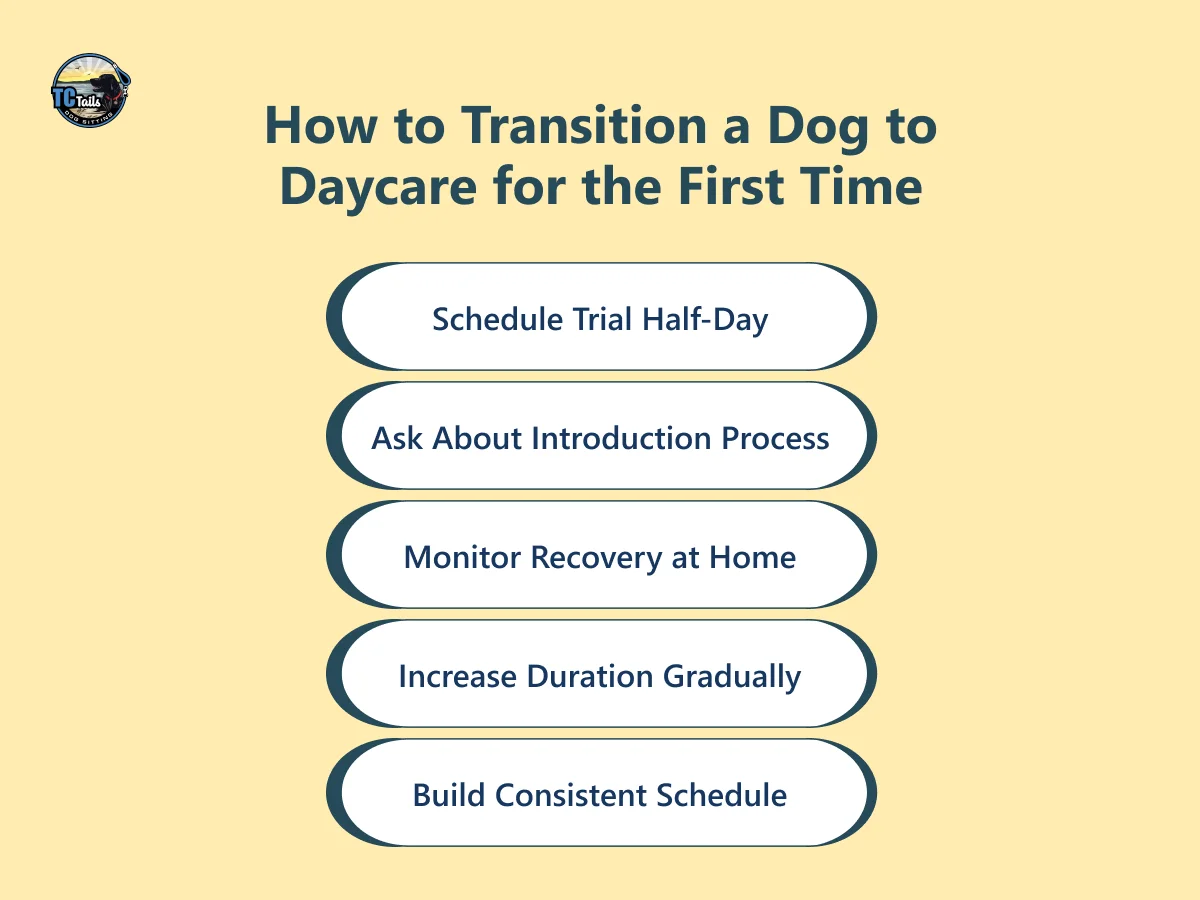
Step 1: Schedule a Trial Half-Day
Never start with a full day. Book a three to four hour visit so your dog experiences the environment, exits before overstimulation, and builds a positive association with the space. Ask for a report on how they interacted.
Step 2: Ask About the Introduction Process
A quality daycare for dogs introduces new dogs one at a time in a neutral space, not by releasing them directly into an existing pack. Ask the caretaker exactly how they manage introductions on the first visit.
Step 3: Monitor Recovery at Home
A healthy daycare experience leaves a dog pleasantly tired but not anxious. If your dog spends the evening pacing, refuses food, or shows stress behaviours like excessive licking or yawning, the group environment was too intense.
Step 4: Increase Duration Gradually
After two or three successful half-days, extend to full days only when your dog is clearly comfortable. Rushing this process creates negative associations that are harder to reverse than a slow start.
Step 5: Build a Consistent Schedule
Dogs are creatures of habit. Once daycare works for your dog, consistency builds security. Irregular attendance can reset the social comfort that consistent attendance builds over time.
Considering Daycare or Boarding for Your Dog? |
What TC Dog Owners Ask About Daycare and Boarding
Traverse City dog owners frequently ask whether dog sitting services require their dog to be fully vaccinated before starting. The answer is yes, regardless of whether it is daycare or boarding. Bordetella, rabies, and DHPP are the baseline requirements at quality facilities and in-home services alike.
Another common question is whether a dog needs to be neutered or spayed to attend daycare. Policies vary, but many facilities require it for intact dogs over 12 months, particularly for group play environments. In-home settings with limited dogs present are often more flexible on this front, especially for dogs with established behavioral profiles that have been assessed in a meet-and-greet.
The question Traverse City owners ask most is simply whether their dog will be okay. The honest answer depends on preparation, the quality of the caretaker, and the match between the dog’s personality and the environment. The AVMA’s companion animal care guidelines establish that boarding and daycare staff must be trained in animal behavior, safety, and proper handling before working with dogs in a care environment. That is exactly why TC Tails offers a free meet-and-greet before any commitment.
Conclusion
Choosing between daycare and overnight boarding care for your pup in Traverse City is not about which is more convenient for you. It is about which format your dog’s personality actually supports. TC Tails provides High-energy where social dogs thrive in structured daycare. Anxious, older, and medically complex dogs do best with calm in-home dog overnight care that mirrors their home routine.
book your free meet-and-greet and figure out together what suits your dog best.
FAQs
Dog daycare vs boarding services in Traverse City?
Dog daycare covers supervised daytime hours while you work, with your dog returning home in the evening. Dog boarding services cover overnight and multi-day stays when you travel or are away for extended periods. Daycare suits sociable, high-energy dogs who need stimulation during the day. Boarding suits dogs who need consistent overnight supervision, a calm home-like environment, and a single trusted caretaker rather than a rotating group care staff.
How do I know if my dog is suited for daycare for dogs?
A dog suited for daycare approaches unfamiliar dogs with a loose, wiggly body and plays easily without escalating. They recover quickly from normal rough-and-tumble interactions and show consistently relaxed body language in social environments. Dogs who stiffen, growl, or hide when meeting new dogs are typically not good daycare candidates and benefit more from individual dog sitting services in a one-on-one setting.
Can senior dogs attend dog daycare in Traverse City?
Senior dogs can attend daycare if the facility offers a calm, low-energy environment separate from younger high-drive dogs. However, many older dogs do better in individual dog overnight care or in-home boarding where activity levels are adjusted to their physical capabilities. Senior dogs also benefit from closer monitoring for pain signals and mobility challenges that group play settings may miss. Ask any caretaker specifically how they accommodate senior dogs before booking.
How long to transition a dog to daycare first time?
Most dogs need two to four trial visits to feel comfortable in a daycare environment. Starting with half-day sessions and extending duration gradually over one to two weeks prevents overstimulation and builds positive associations. Dogs who show stress behaviours at home after their first visits, such as pacing, refusing food, or excessive anxiety behaviours, may need a slower introduction or may not be suited to group daycare at all.
What vaccines does my dog need for daycare or boarding?
Both daycare and dog boarding services require current rabies, DHPP, and Bordetella vaccinations at minimum. Some facilities also require leptospirosis, particularly for dogs with outdoor exposure. Vaccination requirements protect every dog in the care environment and are non-negotiable at responsible facilities. Bring written vaccination records from your vet at the first visit, and ensure all boosters are current at least two weeks before your dog’s first day.
