
Does your stomach drop when you think about leaving your allergy-prone pup with someone new? You’re not alone. Research shows food allergies affect between 1-2% of all dogs receiving veterinary care, but that number jumps significantly—up to 40%—in dogs already showing signs of pruritus or skin issues. When you’re searching for dog boarding services Traverse City families can trust, understanding how to communicate your dog’s dietary needs isn’t just important—it could be lifesaving.
I’ve seen too many anxious pet parents delay much-needed trips because they’re worried about their dog’s special feeding requirements. But here’s the truth: with the right preparation and a caring sitter who understands food sensitivities, your dog can thrive while you’re away. This guide will walk you through everything you need to know about creating a foolproof feeding plan that protects your four-legged family member.
Understanding Food Allergies Versus Intolerances
Many dog owners use “allergy” and “intolerance” interchangeably, but they’re actually different conditions requiring different approaches. Food allergies involve your dog’s immune system mounting an attack against specific proteins in their diet. Think of it like their body mistakenly identifying chicken or beef as a dangerous invader. These reactions are immune-mediated hypersensitivity responses to dietary proteins, manifesting through various dermatologic or gastrointestinal symptoms.
Food intolerances don’t involve the immune system at all. They’re more like your dog’s digestive system saying, “I can’t process this properly.” The result might look similar—upset stomach, diarrhoea, or vomiting—but the underlying cause differs. This distinction matters because it affects how strictly you need to control your dog’s diet during boarding.
Here’s what really matters for dog-sitting services: both conditions require careful attention to what goes into your pup’s bowl. Research indicates that beef, dairy products, chicken, and wheat are the most common food allergens contributing to canine adverse food reactions. If your dog reacts to any of these proteins, you’ll need to be extra vigilant about sharing this information with your sitter.
Recognizing Signs Your Dog Has Food Sensitivities
Spotting food sensitivities isn’t always straightforward. Unlike seasonal allergies that come and go, food-related issues stick around year-round. Watch for persistent itching that doesn’t improve with flea treatments or seasonal allergy medications. Dogs with food allergies commonly experience pruritus affecting their ears, feet, belly area, and sometimes perianal or perigenital skin.
Chronic ear infections are another red flag. Does your pup seem to get ear infections that clear up with medication but return within weeks? This cycle often points to an underlying food sensitivity. Gastrointestinal symptoms like intermittent diarrhoea, frequent gas, or occasional vomiting shouldn’t be ignored either, especially when they happen regularly after meals.
Common symptoms to share with your Traverse City dog sitter providers:
- Excessive scratching, especially around ears, paws, and belly
- Red, inflamed skin or hot spots appearing without obvious cause
- Chronic ear infections with yeasty smell or dark discharge
- Digestive issues, including soft stools, diarrhea, or excessive gas
The challenge with food allergies is that symptoms can take hours or even days to appear after your dog eats the offending ingredient. Studies show that veterinarians performing oral food challenges need to wait up to 14 days for more than 90% of dogs with skin-manifesting food allergies to show a flare of clinical signs. This delayed reaction makes strict dietary control crucial during your dog’s entire boarding stay.
Creating Your Detailed Feeding Plan Document
Think of your feeding plan as a safety manual specifically written for your dog. When you’re evaluating at-home dog sitters or doggy day care Traverse City facilities, a comprehensive document demonstrates you’re a responsible pet parent while protecting your pup.
Start with specifics. Don’t just write “2 cups of food twice daily.” Instead, specify the exact brand, formula, and even the lot number if your dog is particularly sensitive. Include whether you measure level cups or heaping cups. Does your dog eat better if the food is slightly warmed? Should it be mixed with water? These details matter more than you might think.
List every single ingredient your dog cannot have. Be explicit about what “chicken” means in your household—does it include chicken fat, chicken meal, and chicken broth, or just whole chicken? Your in-home dog-sitting provider needs to know exactly where to draw the line.
Essential information for your feeding document:
- Exact food brand, formula name, and serving size with measuring instructions
- Complete list of known allergens and ingredients to absolutely avoid
- Any approved treats, including specific brands and flavors
- Emergency contact information for your veterinarian and trusted backup contact
Don’t forget to address treats. Many boarding facilities and sitters love rewarding dogs with treats, but this is where accidental exposures often happen. Either provide a supply of safe treats or explicitly state that no treats should be given under any circumstances. Include feeding times that mirror your home routine as closely as possible. Dogs thrive on consistency, and maintaining their regular schedule helps reduce stress during boarding.
Preparing Your Dog’s Food Supply
Once you’ve documented everything, prepare the actual food. Always send more food than your dog will need. Plan for your expected time away, then add at least two extra days’ worth. Travel delays happen, and you don’t want your sitter scrambling to find safe food if you’re stuck an extra day.
Package daily portions in individual containers or bags if possible. This makes feeding foolproof for your dog-watching service provider and reduces the chance of portion errors. Label each package with the day, mealtime, and any special instructions. Store the food in its original bag whenever possible. This preserves freshness and allows your sitter to reference the ingredient list if any questions arise.
Consider the storage requirements too. Does the food need refrigeration after opening? Should it be kept in an airtight container? Your dog boarding services Traverse City provider should know exactly how to store your pup’s meals.
Communicating Effectively with Your Sitter
The best feeding plan in the world doesn’t help if your sitter doesn’t fully understand it. Schedule a meet-and-greet well before your departure date. This gives you time to walk through the feeding plan in person, answer questions, and make sure everyone’s on the same page. Bring a sample of your dog’s food so your sitter can see exactly what it looks like.
Ask direct questions about their experience with food allergies. A quality dog sitting services provider won’t be offended—they’ll appreciate your thoroughness. How do they prevent cross-contamination if they care for multiple dogs? Where will they store your dog’s special food? What’s their protocol if your dog refuses to eat or shows signs of a reaction?
Discuss the “what if” scenarios explicitly. What should your sitter do if your dog somehow gets into something they shouldn’t? Since food allergies are nonseasonal and many dogs become sensitive to what they regularly consume, vigilance during every meal matters tremendously. Provide emergency authorization in writing. Some veterinarians won’t treat your dog without your explicit permission, which is impossible to get if you’re on a plane or out of cell service.
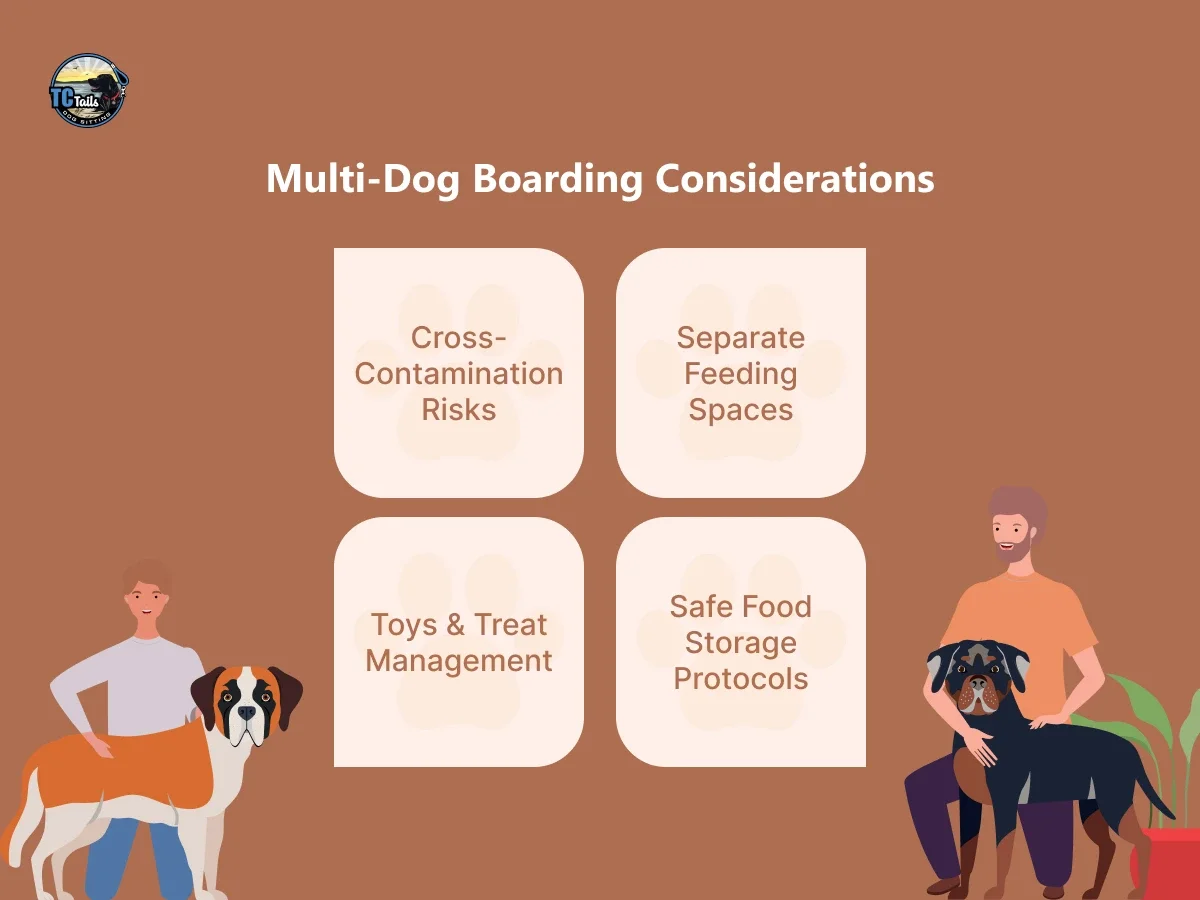
Multi-Dog Boarding Considerations
Cross-Contamination Risks
If your dog will be staying where other dogs are present, you need additional precautions. Cross-contamination isn’t just about shared food bowls—it’s also about toys, treats during training, and even residue from another dog’s mouth after they eat.
Separate Feeding Spaces
Request separate feeding areas if possible. Your dog should eat in a space where food from other dogs won’t accidentally end up in their bowl. Some at-home dog sitters excel at providing this kind of individualized care.
Toys & Treat Management
Address the toy and treat situation directly. Other dogs might leave food particles on shared toys. Be clear about whether your dog should participate in group activities where treats are used to avoid accidental exposure.
Safe Food Storage Protocols
Ask about food storage procedures. Will your dog’s food be kept completely separate from other dogs’ meals? Can the facility guarantee no cross-contamination during meal prep? These aren’t unreasonable questions—they’re essential for your dog’s health and safety.
Testing Your Plan Before Departure
Never wait until your actual vacation to test your feeding plan. Consider booking a short overnight stay or even just a few hours at your chosen dog boarding services Traverse City location. This lets you see how your sitter handles the feeding routine and whether your dog adjusts well to eating in a new environment.
Ask for photo or video updates during the trial. Seeing your dog eat their meals normally in the new environment provides peace of mind. It also confirms your sitter is following your instructions correctly. Use the trial to refine your instructions. Maybe you realized you forgot to mention that your dog needs their bowl placed on a mat or that they eat better if given privacy.
Managing Allergic Reactions
Despite your best planning, reactions can still happen. Your sitter needs to know exactly what symptoms to watch for and when to seek help. Create a symptom chart with photos if possible. What does normal skin look like on your dog versus the start of a reaction? This visual reference makes it easier for someone unfamiliar with your dog to spot problems early.
Define the severity levels clearly. Minor itching might just require a phone call to you, while vomiting or severe distress requires immediate veterinary attention. Your sitter shouldn’t have to guess which category a symptom falls into. Provide any emergency medications your vet has prescribed along with clear dosing instructions.
Finding the Right Boarding Provider
Not all boarding situations are created equal when your dog has dietary restrictions. Look for providers who ask detailed questions about your dog’s health and diet. If a facility or sitter doesn’t enquire about allergies, medications, or special dietary needs, that’s a red flag. Quality dog-watching service providers want to know everything that affects your dog’s wellbeing.
Ask about their experience specifically with food allergies. How many dogs with dietary restrictions have they cared for? Can they provide references from other pet parents whose dogs have similar needs? Consider the provider’s living situation or facility setup. Smaller, home-based operations often provide better control over diet and environment than large facilities with multiple staff members.
Conclusion
Building a safe feeding plan for your allergy-prone dog doesn’t have to be overwhelming. With thorough documentation, clear communication, and the right boarding partner, your dog can stay healthy and comfortable while you’re away.
The investment you make in creating comprehensive feeding instructions pays dividends in peace of mind. You’ll travel knowing your dog’s specific dietary needs are understood and respected. Your sitter will feel confident they can provide excellent care without risking your dog’s health.
Remember that choosing dog boarding services from Traverse City providers who genuinely care about special needs dogs makes all the difference. The right sitter won’t see your detailed instructions as demanding—they’ll appreciate having everything they need to keep your pup safe and happy.
At TC Tails, we understand the anxiety pet parents feel when leaving dogs with special dietary needs. With over 20 years of experience caring for dogs of all temperaments and health requirements in our Traverse City home, we’ve developed protocols specifically for managing food allergies and sensitivities during boarding stays. Reach out today to discuss your dog’s unique needs and ensure a safe, stress-free stay. Book your consultation now!
FAQs
How far in advance should I prepare my dog’s feeding plan before boarding?
Start at least two weeks before your departure date. This gives you time to document everything, schedule a meet-and-greet with your sitter, and potentially do a trial run. Rushing this process increases the chances of overlooking important details that could affect your dog’s health and comfort.
Should I bring my dog’s regular bowls or let the sitter use their own?
Bring your dog’s own bowls whenever possible. Familiar bowls can encourage a stressed dog to eat normally, and you eliminate any risk of residue from other pets’ food contaminating your dog’s meals. This is especially important for dogs with severe allergies.
What if my dog refuses to eat at the boarding facility due to stress?
Discuss this possibility with your sitter beforehand. Missing one meal isn’t usually cause for alarm, but if your dog skips multiple meals, your sitter should contact you and potentially your veterinarian. Some dogs eat better with puzzle feeders or when fed in a quiet, private space away from other animals.
Can I request that my dog be kept separate from other dogs during boarding if they have food allergies?
Absolutely. Many in-home dog-sitting providers and facilities offer private accommodations specifically for dogs with special needs. This prevents accidental food sharing and reduces your dog’s stress level. Be upfront about this need when researching boarding options.
How do I know if a reaction is serious enough to require emergency veterinary care?
Severe symptoms requiring immediate veterinary attention include difficulty breathing, facial swelling, collapse, continuous vomiting or diarrhoea, or signs of severe distress. Your feeding plan should outline these emergency scenarios clearly so your sitter can act quickly without second-guessing.