
The Phone Call No Pet Parent Wants to Receive
Picture this scenario: You’re finally relaxing on that long-overdue vacation when your phone buzzes. Your dog got into something at the boarding facility, and nobody quite knew what to do in those first critical minutes.
Here’s what most Traverse City pet parents don’t realize—whether you’re arranging dog overnight boarding or leaving your pup with trusted dog sitters at their home, knowing basic first aid isn’t just helpful. It’s genuinely essential for every responsible owner. The American Veterinary Medical Association reports that quick action during pet emergencies can dramatically improve outcomes, yet fewer than 20% of pet owners feel confident handling common situations.
Before your next trip, mastering these fundamentals gives you something invaluable: real peace of mind knowing you’ve done everything possible to prepare.
Why First-Aid Knowledge Matters for Every Boarding Situation
When families throughout Traverse City search for quality pet care, whether doggy day care Traverse City options or overnight stays, they focus heavily on facility reviews, yard space, and caregiver experience. All critically important factors. But here’s what separates truly prepared pet parents from the rest: they also ensure their own emergency knowledge is current.
This preparation accomplishes several things simultaneously. First, you can communicate more effectively with your boarding provider about potential concerns. Second, you’ll recognize warning signs during drop-off or pickup that might otherwise go unnoticed. Third, and perhaps most importantly, you demonstrate to any in-home pet-sitting provider exactly what kind of attentive owner you are—which typically translates into even more attentive care for your dog.
| Give your dog the comfort and care they deserve while you’re away. Book your stay with TC Tails’ trusted sitters today! |
Recognizing Common Emergency Signs
Understanding what constitutes a genuine emergency versus normal behavior changes takes practice. Dogs naturally experience some stress during transitions, even with the most caring providers. However, certain symptoms demand immediate attention regardless of circumstances.
Breathing Difficulties
Labored breathing, excessive panting that doesn’t correlate with activity or temperature, or any bluish tint to gums signals respiratory distress. The American Kennel Club emphasizes that breathing abnormalities warrant immediate veterinary contact—no exceptions. Before any overnight dog boarding arrangement, ensure your provider has clear instructions about your veterinarian’s contact information and your preferred emergency clinic.
Digestive Distress Indicators
Vomiting once after eating too quickly rarely causes concern. However, repeated vomiting, bloody stool, or complete refusal to eat for extended periods requires professional evaluation. Dogs staying at quality facilities providing in-home pet sitting typically maintain regular eating schedules, so dramatic appetite changes often indicate underlying issues worth investigating.
Mobility and Neurological Changes
Sudden limping, reluctance to move, disorientation, or seizure activity are serious situations. Any reputable doggy day care Traverse City provider maintains protocols for these scenarios, but owners should also understand basic stabilization techniques.
Essential First-Aid Skills Worth Learning
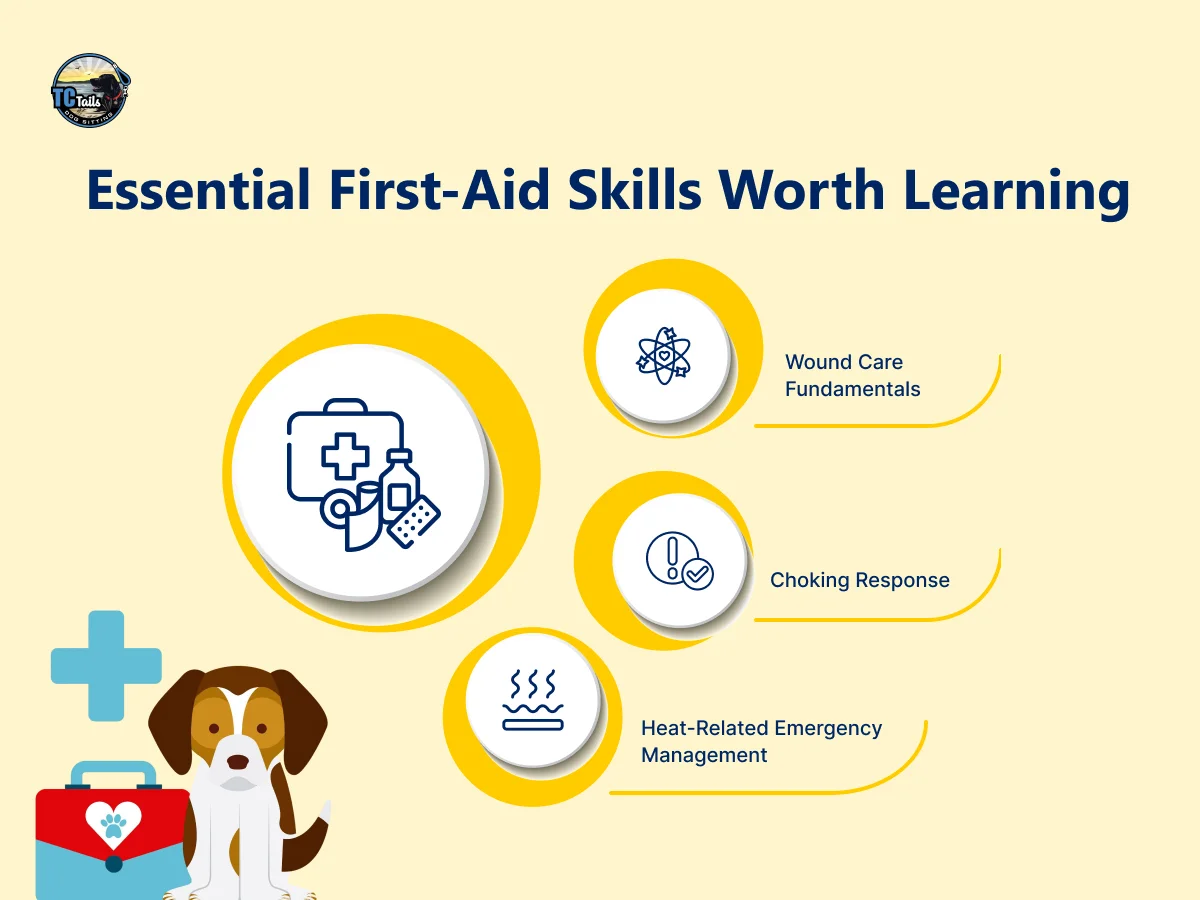
You don’t need veterinary school credentials to handle common situations effectively. These practical skills translate directly into better outcomes during actual emergencies.
Wound Care Fundamentals
Minor cuts and scrapes happen during normal play—dogs explore with enthusiasm, after all. The Merck Veterinary Manual recommends these immediate steps:
- Apply gentle pressure with clean cloth to stop bleeding
- Rinse wounds with clean water or saline solution
- Avoid hydrogen peroxide, which can damage healthy tissue
- Cover with non-stick bandage until veterinary evaluation
Choking Response
Dogs investigate everything with their mouths, making choking a realistic concern. Learning the modified Heimlich maneuver for dogs—different from the human version—could save your pet’s life. The technique varies based on dog size, so practicing with your veterinarian before any extended dog overnight boarding stay proves worthwhile.
Heat-Related Emergency Management
Michigan summers bring genuine heat risks, especially for breeds with shorter snouts or thick coats. Recognizing early heat exhaustion signs—excessive drooling, bright red tongue, wobbly movement—allows intervention before situations become critical. Quality dog sitters at their home typically manage outdoor time carefully, but understanding these signs yourself adds another safety layer.
Building Your Emergency Preparation Kit
Every pet parent heading toward any boarding situation should maintain updated emergency supplies and information. Consider assembling these essentials.
Documentation Package
Your boarding provider needs comprehensive information to respond appropriately during emergencies. Prepare copies of current vaccination records, medication lists with precise dosing instructions, your veterinarian’s direct contact number, and authorization for emergency treatment. This documentation serves every in home pet sitting arrangement, not just extended trips.
Contact Hierarchy
Establish a clear communication chain before traveling. Your provider should know who to contact first, second, and third if situations arise. Many Traverse City families designate a local friend or family member as emergency backup when they’ll be traveling through different time zones or areas with limited phone service.
Choosing Providers Who Prioritize Safety
When evaluating doggy day care Traverse City options or overnight boarding providers, asking specific safety questions reveals genuine preparedness levels. Inquire about staff first-aid training and certifications. Ask about emergency protocols—not just that they exist, but what specific steps they follow. Request information about their relationship with local veterinary clinics.
Providers offering dog overnight boarding should readily discuss these topics without hesitation. Those providing personalized in home pet sitting typically demonstrate their safety approach through detailed intake processes and thorough meet-and-greet sessions. Trust your instincts when these conversations feel rushed or dismissive.
Communication Expectations During Your Stay
The anxiety many pet parents experience while traveling often stems from uncertainty rather than actual problems. Establishing clear update expectations with your dog sitters at their home or boarding facility before departure eliminates much of this stress.
Discuss photo and video update frequency. Clarify preferred communication channels—text, email, or phone calls. Determine what situations warrant immediate contact versus routine daily updates. These conversations protect everyone’s peace of mind and ensure your provider understands your specific communication needs.
| Have questions or need more info? We’re here for you! Contact us today to discover how our pet sitting services keep your dog calm, happy, and cared for. |
Returning Home: What to Watch For
Your first-aid awareness shouldn’t end when vacation does. The transition home sometimes reveals issues that developed during boarding stays. Monitor your dog’s behavior, appetite, and energy levels during the first few days back. Minor stress-related changes typically resolve quickly, while persistent symptoms deserve professional attention.
Final Thoughts on Prepared Pet Parenting
Mastering basic pet first-aid represents one of the most meaningful investments any dog owner makes. These skills serve you throughout your pet’s entire life, not just during boarding situations.
When searching for reliable dog overnight boarding throughout Traverse City and surrounding communities, prepared owners ask better questions, communicate more effectively, and ultimately find providers who match their care expectations.
Your dog depends on you for protection and preparation. Taking time to learn these fundamentals before your next trip demonstrates exactly the kind of thoughtful ownership that translates into finding—and deserving—exceptional care.
Ready to experience personalized boarding where your pet receives genuine attention and expert care? TC Tails provides trusted in-home dog boarding throughout Traverse City, Michigan, with over 20 years of hands-on experience. Every guest enjoys a spacious fenced yard, comfortable home environment, and an owner who’s first-aid and CPR certified. Contact Jared today to schedule your meet-and-greet and discover why local families trust TC Tails with their beloved companions.
FAQs
What first-aid certification should I look for in a dog boarding provider?
Look for Pet First Aid and CPR certification from recognized organizations like the American Red Cross or PetTech. These credentials indicate formal emergency response training.
How can I prepare my dog’s medical information for boarding?
Create a single document listing current medications, dosing schedules, allergies, veterinarian contact information, and emergency treatment authorization. Provide copies to your boarding provider.
Should I learn pet CPR before leaving my dog for overnight boarding?
Yes-understanding basic pet CPR provides valuable knowledge for any emergency situation, whether at home or while your dog stays elsewhere.
What questions should I ask about emergency protocols at boarding facilities?
Ask specifically about staff training certifications, relationships with local veterinary clinics, communication procedures during emergencies, and transportation arrangements if veterinary care becomes necessary.
How quickly should a boarding provider contact me during an emergency?
Reputable providers contact owners immediately upon recognizing emergency situations, followed by veterinary consultation. Establish this expectation and preferred contact methods before your trip begins.